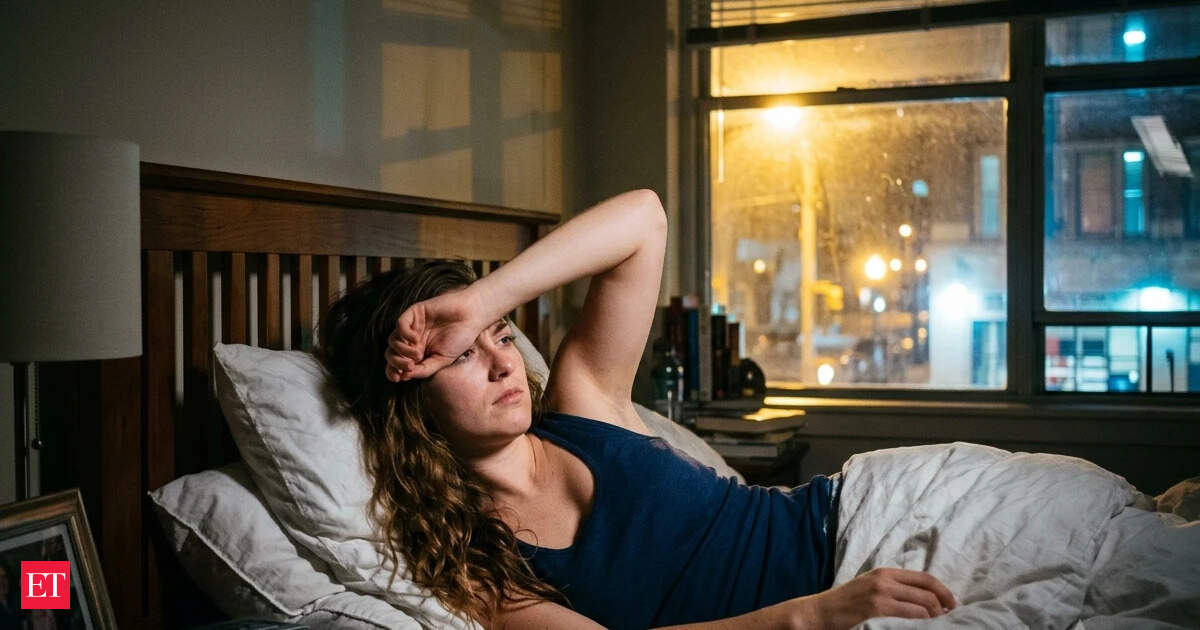
Picture this familiar bedtime scenario: you have fluffed your pillows, adjusted the thermostat, and pulled up the covers, ready for a restful night. But just as your eyes begin to heavy, a tiny speck of light catches your attention. Perhaps it is the microscopic standby LED on your television, an ambient glow sneaking past the edge of the window blinds, or the pulsing indicator on an air purifier. For millions of people, that faint pinpoint of illumination is not merely noticeable—it makes sleep virtually impossible.
Society often dismisses this intensity as a quirky bedtime preference, mild eccentricity, or oversensitivity. However, psychological research and sleep neurobiology tell a completely different story. If you need pitch-black darkness to shut down your brain, your reaction is not an irrational quirk. It reveals profound truths about how your nervous system processes sensory input, navigates environmental control, and interprets safety.
The Sensory Processing Connection: When the Brain Refuses to Filter
At the heart of the inability to sleep with ambient light is how your brain handles environmental stimuli. In clinical psychology, individuals with heightened sensitivity to external cues often exhibit what is known as Sensory Processing Sensitivity (SPS). People with this trait process sensory data more deeply and thoroughly than the average population.
For a typical sleeper, the brain's sensory gating mechanism filters out background noise and dim illumination once exhaustion sets in. But for someone with high sensory sensitivity, the brain treats that sliver of streetlight as active, relevant data. Rather than dampening sensory input, the nervous system remains on high alert, continuously processing the photons hitting the eyelids.
Because human eyelids are thin and translucent, your retinas can register light even when your eyes are closed. For sensitive individuals, this input signals to the thalamus—the brain's sensory relay hub—that the day is not officially over. The result is an involuntary state of cognitive vigilance that prevents the transition into deep rest.
The Evolutionary Nervous System: Light as a Signal for Vigilance
From an evolutionary perspective, human survival relied entirely on acute responsiveness to environmental conditions. For hundreds of thousands of years, daytime meant foraging, hunting, and navigating hazards, while darkness provided a protective cover for deep, restorative slumber inside a secure dwelling.
When light enters your bedroom, your primitive nervous system does not recognize it as a benign electronic charger or an outdoor streetlight. Instead, it interprets light as an ancestral wake-up call. Psychology shows that individuals who cannot sleep in light often have a nervous system wired for heightened environmental awareness.
Even a microscopic amount of illumination can keep your sympathetic nervous system—the branch responsible for fight-or-flight responses—partially engaged. You may not experience outright anxiety, but your body maintains low-level physical tension, elevated micro-arousals, and a reluctance to surrender consciousness.
The Psychological Need for Boundaries and Control
Beyond neurological wiring, our nighttime habits are deeply tied to psychological safety, emotional boundaries, and perceived control. Throughout the waking hours, modern life demands constant multitasking, social performance, sensory bombardment, and boundary negotiations.
For many, nighttime represents the only period in a twenty-four-hour cycle completely free from social expectations and digital demands. Total darkness acts as a powerful psychological barrier. It creates an absolute, undeniable boundary between the outside world and your internal self.
When ambient light penetrates your bedroom, that psychological barrier becomes compromised. The light represents an intrusion of the outside environment into your personal sanctuary. Demanding absolute pitch-black conditions is often an instinctive, healthy assertion of control—a deliberate way your subconscious mind announces that the external world has officially stopped.
The Circadian Science: How Light Halts Melatonin Production
While the psychological reasons run deep, the physiological cascade triggered by bedroom light is equally unforgiving. Deep within the brain lies the suprachiasmatic nucleus (SCN), a tiny cluster of cells in the hypothalamus that orchestrates your circadian rhythm.
Specialized cells in your eyes, called intrinsically photosensitive retinal ganglion cells (ipRGCs), contain a photopigment called melanopsin. These cells are extraordinarily sensitive to short-wavelength blue and green light. When exposed to even dim artificial lighting:
- Melatonin suppression occurs: The pineal gland is chemically signaled to delay or blunt the release of melatonin, the master hormone responsible for signaling sleep onset.
- Sleep architecture fragments: Even if you manage to drift off, studies indicate that low-level light exposure diminishes time spent in restorative slow-wave sleep and rapid eye movement (REM) phases.
- Metabolic signaling shifts: Chronic nighttime light exposure has been clinically linked to dysregulated cortisol rhythms, morning insulin resistance, and elevated resting heart rates.
Actionable Strategies to Build an Uncompromised Sleep Sanctuary
If you recognize yourself as someone who cannot tolerate nighttime light, stop fighting your biology or trying to force yourself to adapt. Instead, align your environment with your nervous system's distinct needs through practical sleep hygiene interventions:
- Audit electronic light leaks: Walk through your bedroom at night and identify every charging light, clock display, and appliance diode. Use specialized light-blocking stickers or simple black electrical tape to cover them completely.
- Upgrade your window treatments: Standard Venetian blinds often leak substantial street lighting. Install true blackout curtains with wraparound curtain rods that seal the sides of the window frame against light bleed.
- Invest in a contoured sleep mask: If you travel or cannot fully blackout your bedroom, use a 3D molded, contoured eye mask. These masks rest on your facial bones rather than placing direct pressure on your eyelids, creating complete personal darkness.
- Shift to warm, low-lux evening illumination: At least 60 minutes before bed, switch off cool-toned overhead fixtures. Rely instead on low-placed lamps equipped with dim, amber, or red bulbs that do not stimulate your melanopsin receptors.
Key Takeaways: Honoring Your Body's Nighttime Intuition
Needing complete darkness to fall asleep is neither a character flaw nor an inconvenient habit. It is a clear reflection of a deeply attuned sensory system, an evolutionarily vigilant brain, and an innate instinct to preserve your psychological sanctuary. By acknowledging what your mind and body need to feel safe, protected, and fully unplugged, you can eliminate environmental friction and claim the profound, restorative sleep you deserve.
Source Attribution: Article content originally reported by Gandharv Walia. Read original story coverage on Gandharv Walia →