The Ultimate Four-Step Winter Skincare Routine for Deeply Hydrated, Glowing Skin
Have you ever stepped outside on a brisk December morning only to feel your complexion instantly tighten, sting, or flake? If your skin feels persistently parched the moment the temperature drops, you are far from alone. Winter brings cozy sweaters and fireside evenings, but it also delivers an unforgiving combination of freezing outdoor winds and moisture-sapping indoor central heating.
This environmental shift creates a hostile environment for your delicate moisture barrier. The skin barrier, technically known as the stratum corneum, acts as your body’s front-line shield against environmental aggressors while preventing essential water from escaping. When winter strips away ambient humidity, your skin undergoes accelerated transepidermal water loss (TEWL). Fortunately, restoring your natural radiance does not require an overwhelming ten-step regimen. In fact, scaling back to a mindful, targeted four-step routine is often the most effective way to repair and protect your barrier all season long.
Understanding Why Winter Depletes Your Skin Barrier
Before jumping into solutions, it helps to understand what is happening beneath the surface. In summer, elevated humidity levels naturally support skin hydration. As cold weather sets in, the absolute humidity in the air plummets. At the same time, cranking up indoor thermostats creates an artificial microclimate that actively pulls moisture out of your epidermis.
When moisture evaporates faster than your body can replenish it, the lipid matrix holding your skin cells together begins to destabilize. This breakdown manifests as visible dullness, rough texture, increased redness, and sudden sensitivity to products that previously caused no issues. By curating a routine specifically calibrated to counteract TEWL, you can insulate your skin against the seasonal elements.
Step 1: Switch to a Gentle, Nourishing Cleanser
The foundation of any successful cold-weather regimen begins with how you wash your face. During warmer months, gel-based or foaming cleansers work wonders to sweep away excess sebum and sweat. In winter, however, harsh surfactants like sulfates can strip away the precious natural oils your skin desperately needs to stay protected.
Look for gentle, non-foaming formulas such as milk, cream, or balm cleansers. These formulations utilize skin-friendly emollients that melt away makeup, pollutants, and daily grime without disrupting your natural acid mantle.
- Look for key ingredients: Colloidal oatmeal, glycerin, squalane, and soothing botanical oils.
- Temperature matters: While a steaming hot shower feels divine in freezing temperatures, scalding water dilates capillaries and instantly dissolves vital surface lipids. Always wash your face with lukewarm water.
- Morning tip: If your skin is exceptionally dry or sensitive, consider skipping a morning cleanse altogether and simply splashing your face with cool or tepid water before applying your serums.
Step 2: Layer Hydration with a Concentrated Serum
Once your canvas is clean, it is time to infuse moisture back into the deeper layers of the epidermis. This is where high-performance serums shine. The primary goal during this step is to saturate the skin with humectants—water-loving molecules that attract and bind water directly to your cells.
Hyaluronic acid remains the gold standard in this category due to its ability to hold up to 1,000 times its weight in water. However, polyglutamic acid, beta-glucan, and glycerin are equally formidable humectants that provide multi-depth hydration and plump fine surface lines.
How to Apply Serums Correctly in Winter
Applying humectants in dry winter air comes with an important caveat: humectants need moisture to work. If you apply a hyaluronic acid serum onto completely dry skin in an arid room, the molecule may pull water upward from the deeper layers of your dermis instead of from the air, exacerbating dryness. Always apply your hydrating serum onto slightly damp skin immediately after cleansing or misting with a gentle, alcohol-free facial toner.
Step 3: Lock It In with a Rich, Lipid-Replenishing Moisturiser
Humectants draw water in, but without a protective barrier over top, that moisture will evaporate into thin air within minutes. The third step is your skin's defensive coat: a rich, emollient-dense moisturiser that seals in all that prior hydration and fortifies the lipid barrier.
While light gel lotions may suffice in the summer, winter demands formulations rich in both emollients (which smooth and soften rough skin cells) and occlusives (which form a physical seal over the surface).
- Ceramides: These naturally occurring lipids make up over 50% of your skin composition. Replenishing them rebuilds the cellular mortar that keeps moisture locked inside.
- Fatty Acids and Cholesterol: Alongside ceramides, these complete the lipid triad essential for optimal barrier function.
- Niacinamide: A multi-tasking form of Vitamin B3 that calms winter redness, soothes inflammation, and stimulates natural ceramide production.
- Occlusives: Ingredients like shea butter, squalane, or a light layer of petrolatum for particularly dry patches provide an impermeable shield against biting winter winds.
Step 4: Finish Daily with Broad-Spectrum SPF
Perhaps the most common cold-weather skincare myth is that sunscreen is only necessary when the sun is blazing at the beach. In reality, skipping sun protection during winter is one of the fastest ways to compromise your skin health and accelerate premature photoaging.
While UVB rays (the wavelength primarily responsible for sunburns) are weaker during winter, UVA rays remain consistently strong all year round. UVA radiation penetrates through heavy cloud cover and standard window glass, reaching deep into the dermis to break down collagen and elastin fibers.
Furthermore, if you live in or visit areas with snow cover, ultraviolet rays reflect off the white surface, nearly doubling your overall radiation exposure. Complete your morning routine with a broad-spectrum sunscreen offering an SPF of 30 or higher. Many modern winter sunscreens feature nourishing, moisturizing bases that double as a daily primer, simplifying your morning routine without leaving a chalky white cast.
Bonus Winter Habits for Head-to-Toe Glow
Topical products provide crucial support, but healthy skin also relies on supportive daily lifestyle habits. Elevate your four-step winter routine with these practical tips:
- Run a bedroom humidifier: Placing a cool-mist humidifier next to your bed counteracts the dehydrating effects of central heating, infusing the ambient air with 40% to 50% humidity while you sleep.
- Dial back harsh exfoliation: When your skin barrier is compromised, physical scrubs and strong chemical peeling acids can trigger contact dermatitis and flaking. Limit exfoliating treatments to once a week, or pause them entirely until your barrier feels supple again.
- Hydrate from within: Cold weather suppresses your natural thirst response, making it easy to forget water intake. Sipping warm herbal teas or warm water with lemon supports systemic hydration throughout the day.
Key Takeaways for Your Winter Skincare Routine
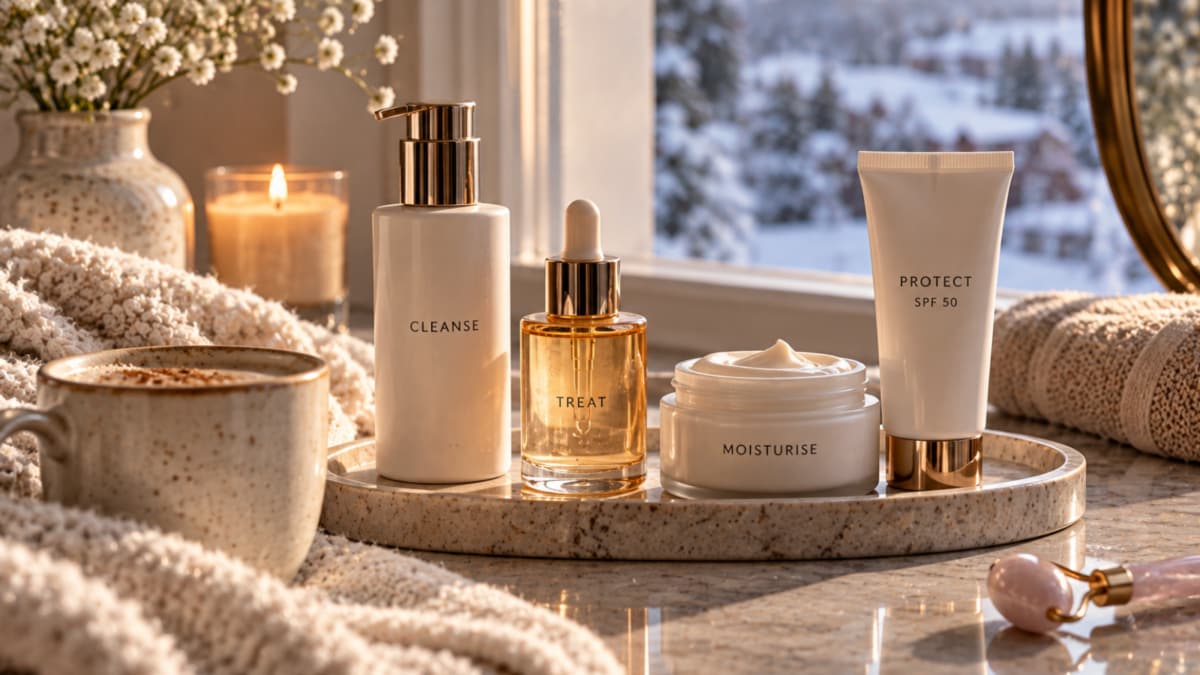
Navigating the colder months does not mean resigning yourself to a tight, flaky complexion. By prioritizing barrier preservation over aggressive treatments, you can maintain a resilient, luminous glow all season long. Remember the four core pillars:
- Cleanse gently: Ditch stripping foaming washes for hydrating creams or balms.
- Hydrate damp skin: Apply humectant-rich serums onto moist skin to maximize absorption.
- Seal and repair: Use rich creams loaded with ceramides and nourishing lipids.
- Protect daily: Keep your broad-spectrum SPF in heavy rotation, rain, snow, or shine.
Source Attribution: Article content originally reported by Swati Chaturvedi; Consumer Trends Desk. Read original story coverage on Swati Chaturvedi; Consumer Trends Desk →

Elena Rostova
WelloraDaily Editorial Team