Why Adding More Pulses to Your Plate Could Cut Cardiometabolic Disease Risk by 19%
When you hear the term “superfood,” your mind might instantly drift toward exotic freeze-dried berries, expensive green powders, or high-end wellness supplements. But what if one of the most powerful dietary shields against modern chronic illness is already sitting quietly in your kitchen pantry, costing less than a dollar a serving?
A major comprehensive study evaluating dietary patterns across nearly 47,000 U.S. adults has revealed compelling news for everyday eaters. Researchers analyzing multi-year national health survey data discovered that individuals with a higher daily consumption of pulses experienced a remarkable 19% lower prevalence of cardiometabolic disease compared to those who rarely or never ate them.
In a world where heart disease and metabolic conditions remain leading public health challenges, this finding highlights an accessible, affordable, and profoundly effective nutritional intervention. Let us take a deeper dive into the science behind this 19% reduction, explore what makes pulses nutritionally unique, and look at practical ways you can effortlessly weave them into your everyday meals.
Understanding the Scope: The Multi-Decade Health Crisis
Cardiometabolic disease does not appear overnight. Rather, it represents an umbrella of interrelated metabolic and cardiovascular conditions, including type 2 diabetes, systemic hypertension, elevated blood lipids, abdominal obesity, and atherosclerotic cardiovascular disease. Together, these conditions represent the primary driver of premature morbidity and mortality across the globe.
The study examined dietary recall and health records from nearly 47,000 participants within federal health survey datasets, providing a broad and representative cross-section of the American population. What set the pulse-eating group apart was not an extreme lifestyle overhaul or rigid restriction, but rather the consistent, habitual presence of these humble legumes on their plates.
Those consuming the highest levels of pulses demonstrated statistically significant improvements across several key biological markers: lower fasting blood glucose levels, better insulin sensitivity, improved lipid profiles, and reduced markers of chronic low-grade inflammation.
What Exactly Are Pulses?
While the word “pulse” is frequently used in culinary and agricultural spheres, many everyday shoppers find the terminology confusing. In simple botanical and culinary terms, pulses are the dry, edible seeds of leguminous plants. Unlike fresh green beans or sugar snap peas, pulses are harvested specifically for their dry seeds.
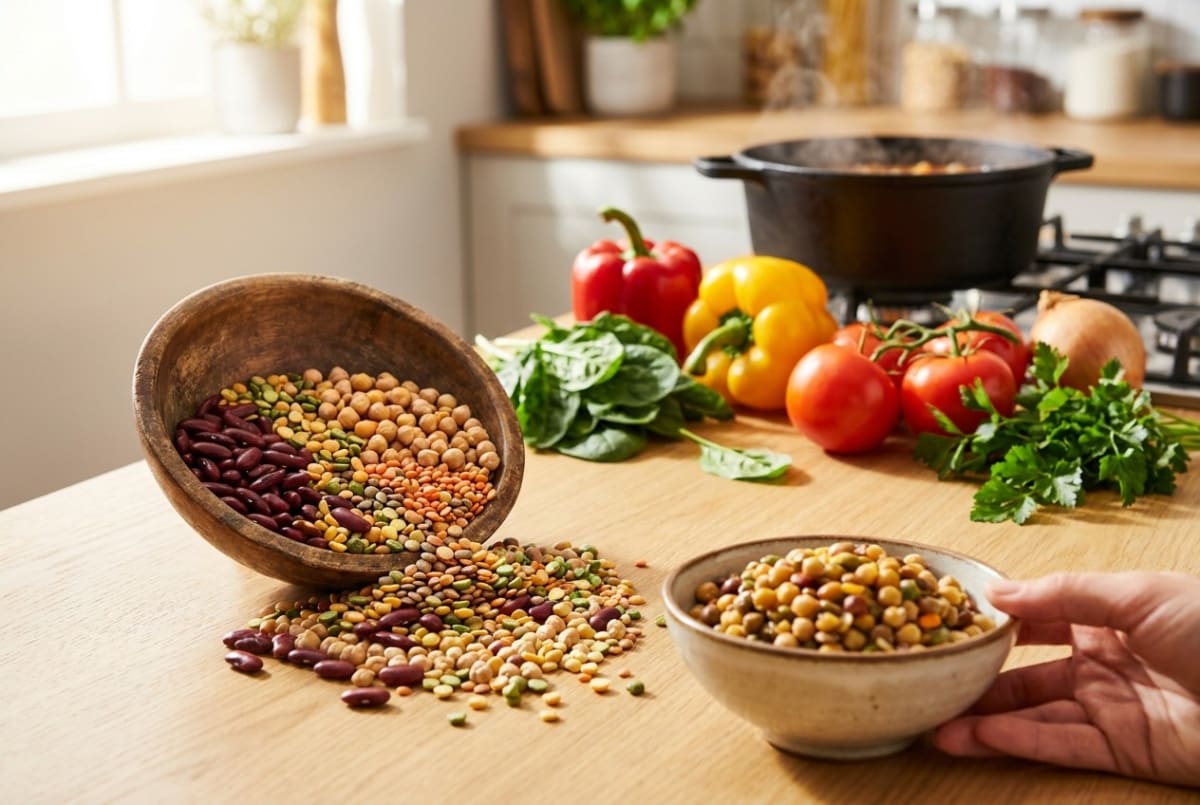
The four primary categories of culinary pulses include:
- Dry Beans: Black beans, pinto beans, kidney beans, cannellini beans, navy beans, and great northern beans.
- Lentils: Brown, green, red, yellow, and black beluga lentils.
- Chickpeas (Garbanzo Beans): Common in Mediterranean, Middle Eastern, and South Asian cuisine.
- Dry Peas: Whole and split green and yellow peas.
It is worth noting that while soy and peanuts are technically legumes, their high oil and fat content excludes them from the formal pulse category, which is distinguished by being naturally low in fat and packed with slow-burning complex carbohydrates and dietary fiber.
The Biological Mechanisms: Why Pulses Shield the Heart and Metabolism
How does a simple cup of lentils or black beans translate into a 19% lower prevalence of complex metabolic disorders? Nutritional scientists point toward a synergy of potent physiological mechanisms that occur when pulses are digested.
1. Unmatched Fiber Density and Gut Microbiome Support
Pulses are among the richest dietary sources of both soluble and insoluble dietary fiber, as well as resistant starch. Resistant starch escapes digestion in the upper gastrointestinal tract and travels directly to the large intestine. There, beneficial gut bacteria ferment it into short-chain fatty acids (SCFAs), particularly butyrate and propionate.
These short-chain fatty acids play a profound role in human physiology. They strengthen the gut barrier, help suppress systemic vascular inflammation, enhance peripheral insulin sensitivity, and communicate directly with metabolic centers in the liver to regulate cholesterol synthesis.
2. Exceptional Glycemic Control
Refined carbohydrates cause rapid spikes in postprandial blood glucose and circulating insulin, which, over decades, exhausts pancreatic beta cells and drives insulin resistance. Pulses possess an exceptionally low glycemic index (GI). The matrix of intact plant protein and soluble fiber delays gastric emptying and slows glucose absorption into the bloodstream, blunting insulin spikes and preventing the energy crashes that drive overeating.
3. Natural Lipid Management
The soluble fibers found abundantly in chickpeas and dry beans act like a sponge in the digestive tract, binding to cholesterol-rich bile acids and facilitating their excretion. To replenish these lost bile acids, the liver is forced to pull low-density lipoprotein (LDL) cholesterol out of the circulation, naturally lowering circulating blood cholesterol levels without pharmacological side effects.
4. Micronutrient and Polyphenol Density
Beyond macronutrients, pulses deliver heavy doses of heart-friendly minerals that modern diets routinely lack, including potassium and magnesium. Potassium promotes the vasodilation of blood vessels and helps balance sodium levels, directly supporting healthy blood pressure. Additionally, pulses are rich in plant polyphenols, flavonoids, and phytosterols that combat oxidative stress within arterial walls.
Simple, Everyday Ways to Increase Your Pulse Intake
One of the best attributes of pulses is their versatility and cost-effectiveness. You do not need to convert to a strictly plant-exclusive diet to reap their protective cardiovascular benefits. Here are practical, delicious strategies to introduce more pulses into your routine:
- The 50/50 Ground Meat Swap: When preparing tacos, bolognese, chili, or shepherd’s pie, replace half of the ground beef or turkey with an equal volume of cooked brown lentils or crushed black beans. You will retain the texture, cut saturated fat, lower grocery costs, and boost fiber dramatically.
- Upgrade Your Lunch Salads: Keep canned chickpeas or cannellini beans rinsed and stored in your refrigerator. Tossing half a cup over leafy greens adds immediate staying power and plant protein that keeps afternoon cravings at bay.
- Creamy Soups Without the Heavy Cream: Pureeing cooked white beans or yellow split peas creates a velvety, luxurious base for vegetable soups and chowders, delivering lush texture alongside substantial protein and fiber.
- Savory Dips and Spreads: Traditional hummus made from chickpeas is a staple, but you can also puree black beans with chipotle and lime, or white beans with garlic and rosemary, for nutrient-dense sandwich spreads and vegetable dips.
Overcoming Digestive Hesitations
A common hurdle preventing people from enjoying pulses regularly is digestive discomfort, particularly bloating or gas. This reaction is primarily caused by oligosaccharides—complex prebiotic fibers that gut bacteria are not yet adapted to ferment efficiently.
To minimize digestive friction, start slowly by adding just two to three tablespoons of thoroughly cooked or rinsed canned beans per day, gradually increasing your serving over two to three weeks. If cooking dry pulses from scratch, soak them overnight in plenty of water, discard the soaking liquid, and simmer them thoroughly until they are fork-tender. Over time, your microbiome adapts, diversifying its bacterial populations to digest these complex fibers smoothly and comfortably.
Key Takeaways for Your Daily Plate
This landmark analysis of nearly 47,000 adults confirms that substantial cardiometabolic protection does not require complicated wellness fads. A 19% reduction in cardiometabolic disease risk is a clinically meaningful metric that can be achieved simply by embracing traditional, unrefined plant foods.
By prioritizing a steady rotation of beans, lentils, chickpeas, and split peas, you nourish your gut microbiome, steady your blood sugar, protect your arteries, and invest in sustainable, long-term vitality—one bowl at a time.
Source Attribution: Article content originally reported by Naturalnews.com. Read original story coverage on Naturalnews.com →

Elena Rostova
WelloraDaily Editorial Team