Hazy Skies, Strong Workouts: Your Complete Guide to Safe Indoor Training When Air Quality Dips
Waking up to a skyline smothered in a dull grey shroud is disheartening for anyone, but for fitness enthusiasts, runners, and daily gym-goers, it feels like an immediate roadblock. When haze conditions deteriorate and air quality readings surge into unhealthy territory, our natural instinct to lace up our sneakers and head outdoors clashes directly with the biological need to protect our lungs. When national bodies like Sport Singapore (SportSG) step in to close outdoor and non-air-conditioned ActiveSG facilities, the message is unmistakably clear: high-intensity outdoor exertion is no longer safe.
However, having your regular outdoor running route or open-air swimming pool temporarily cut off doesn’t mean your fitness momentum has to come to a grinding halt. In fact, an unexpected shift indoors offers an extraordinary opportunity to shore up neglected areas of training, from core stability and mobility to targeted bodyweight strength. With a thoughtful approach and an understanding of indoor environmental controls, you can keep your heart rate up and your aerobic capacity intact without inhaling harmful particulate matter.
The Physiological Price of Training in Hazy Air
Before diving into indoor workout strategies, it is vital to understand why government agencies take the drastic step of closing open-air athletic venues. During severe haze episodes, the primary health hazard stems from microscopic particulate matter, specifically particles measuring 2.5 microns in diameter or smaller, widely known as PM2.5. These particles are small enough to bypass the respiratory tract's natural filtration systems, traveling deep into the bronchioles and crossing directly into the bloodstream.
When you exercise, your physiological demand for oxygen escalates dramatically. Your breathing rate switches from slow, filtered nasal breathing to rapid, deep mouth breathing, pulling significantly greater volumes of unfiltered air straight into your lungs. Pushing through an outdoor workout during unhealthy air quality levels can trigger immediate acute symptoms, including throat irritation, persistent coughing, eye stinging, and shortness of breath. For individuals with underlying respiratory conditions like asthma or allergic rhinitis, exposure can provoke severe bronchospasms.
Over prolonged periods, heavy exertion in polluted air elevates systemic inflammation and places undue stress on the cardiovascular system. Recognizing these risks is the first step toward embracing the pivot to indoor workouts with enthusiasm rather than frustration.
Preparing Your Home Environment for Peak Indoor Performance
Shifting your routine indoors requires more than just clearing space on the living room rug. To ensure your home serves as a genuine sanctuary from outdoor pollutants, you need to deliberately manage your indoor air quality and temperature.
- Seal Doors and Windows: Keep all exterior windows and doors firmly shut during periods of poor air quality. If you notice drafts around window frames, consider using temporary weatherstripping or door draft stoppers to minimize outdoor infiltration.
- Run Air Purifiers Continuously: High-Efficiency Particulate Air (HEPA) purifiers are your greatest ally during haze episodes. Place your purifier in the room where you intend to work out, and turn it on high at least thirty minutes before beginning your session to clear ambient particles.
- Optimize Climate and Airflow: Working out in an enclosed room can quickly lead to stifling humidity and heat. Turn on the air conditioning to maintain a comfortable ambient temperature (ideally between 20°C and 23°C), and use an oscillating fan to keep air circulating without pulling outside air indoors.
- Prioritize Hydration: Air-conditioned environments tend to strip moisture from the air, which can subtly accelerate dehydration. Keep a water bottle nearby and sip consistently before, during, and after your session.
Designing an Effective Indoor Workout Without Specialized Equipment
Many athletes worry that training at home without bulky barbells, treadmills, or cable machines won’t provide enough stimulus to preserve conditioning. The reality is that creative bodyweight programming, high-density interval circuits, and deliberate tempo control can challenge your cardiovascular and muscular systems just as effectively as a grueling track session.
1. Metabolic Conditioning (HIIT)
If you rely on outdoor running or cycling for your daily endorphin rush, high-intensity interval training (HIIT) provides a time-efficient alternative that elevates your heart rate rapidly. By stringing compound movements together with brief rest intervals, you challenge both your aerobic and anaerobic pathways.
- The 20-Minute Density Circuit: Perform 45 seconds of work followed by 15 seconds of rest for four rounds across five fundamental movements: jump squats (or air squats for joint-friendly pacing), push-ups, mountain climbers, reverse lunges, and plank shoulder taps.
- Shadowboxing: Incorporating three-minute rounds of continuous shadowboxing interspersed with thirty seconds of active footwork delivers intense cardiovascular output while refining coordination and core stability.
- Skipping Indoors: If you have adequate ceiling clearance and sturdy flooring, jump rope training burns calories at a rate comparable to brisk outdoor running, while significantly strengthening your calf complexes and ankle stabilizers.
2. Calisthenics and Hypertrophy Through Tempo
Without heavy external weights, the secret to building and maintaining lean muscle lies in manipulating time under tension (TUT). Instead of rushing through push-ups or squats, deliberately slow down each repetition.
Try adopting a 3-1-3 tempo: lower yourself down over three seconds, pause for a full second at the bottom of the movement, and take three seconds to return to the starting position. This eliminates momentum, forces your muscles to recruit stabilizer fibers, and generates intense metabolic stress without requiring a single dumbbell.
3. Core Stability and Postural Restoration
Outdoor athletes often suffer from subtle muscular imbalances caused by repetitive, single-plane movements. An enforced indoor period offers the ideal setting to focus on foundational core integrity. Integrate movements such as dead bugs, bird-dogs, hollow-body holds, and side planks into your daily routine. Strengthening the deep transverse abdominis and posterior chain will make you a far more resilient runner, swimmer, or cyclist once the skies clear.
The Power of Low-Impact Recovery and Mobility
Not every workout needs to leave you breathless and drenched in sweat. In fact, prolonged haze periods can serve as a forced deload phase, allowing your joints and central nervous system to recover from high-impact outdoor training.
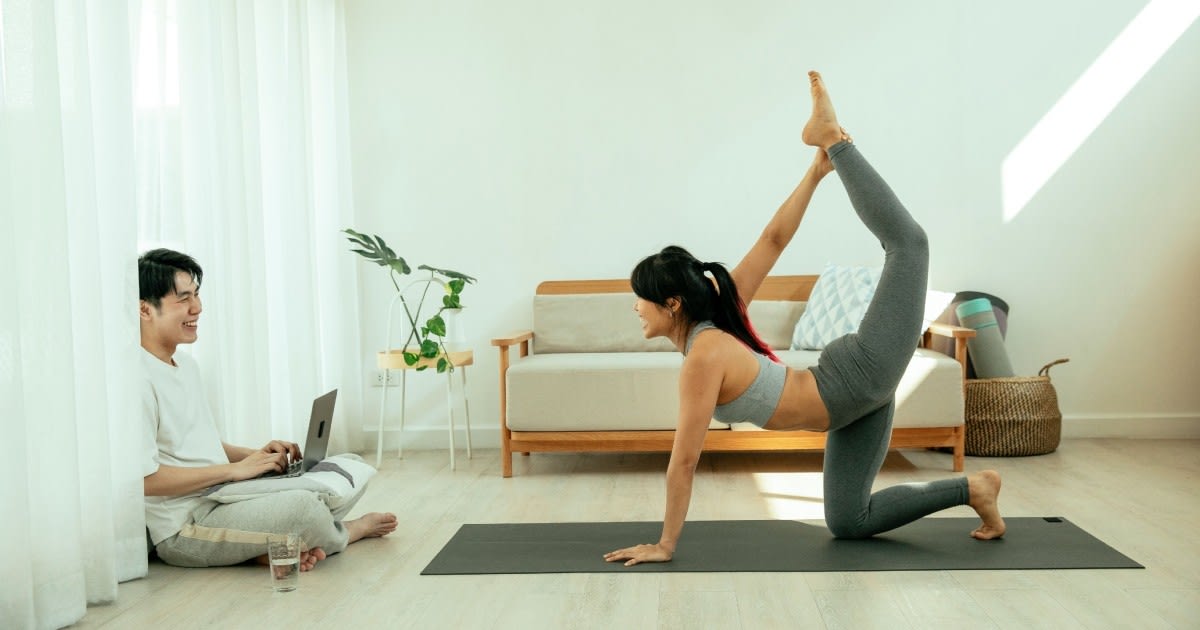
Devoting forty-five minutes to deep mobility work, vinyasa yoga, or dynamic foam rolling enhances blood circulation, reduces chronic fascial stiffness, and improves joint range of motion. Use this indoor window to address tight hip flexors, stiff thoracic spines, and restricted hamstrings. When outdoor facilities reopen, you will return to your sport moving with greater fluidity and a reduced risk of injury.
Key Takeaways for Safe Training During Haze
- Monitor Official Readings: Keep a regular eye on real-time Pollutant Standards Index (PSI) or Air Quality Index (AQI) updates before deciding whether any moderate outdoor activity is permissible.
- Respect Facility Closures: When organizations like SportSG shut outdoor amenities, avoid seeking alternative outdoor spaces; take the hint and train inside.
- Turn Your Home into an Air Oasis: Run HEPA filters in closed rooms to keep PM2.5 concentrations minimal while exercising.
- Embrace Variety: Use this period to explore calisthenics, core stability, isometric holds, and mobility flows that support your broader athletic goals.
- Listen to Your Body: If you feel unexpected chest tightness, wheezing, or dizziness during an indoor workout, stop immediately, hydrate, and rest.
Adverse weather and environmental haze can disrupt our familiar routines, but they do not have to disrupt our commitment to wellness. By adapting your mindset, optimizing your indoor space, and exploring new movement disciplines, you can turn a seasonal inconvenience into a masterclass in personal athletic resilience.
Source Attribution: Article content originally reported by Currents Source. Read original story coverage on Currents Source →

Elena Rostova
WelloraDaily Editorial Team